July 1, 2026 / by Margarita Núñez Estimated read time: 8 minutes
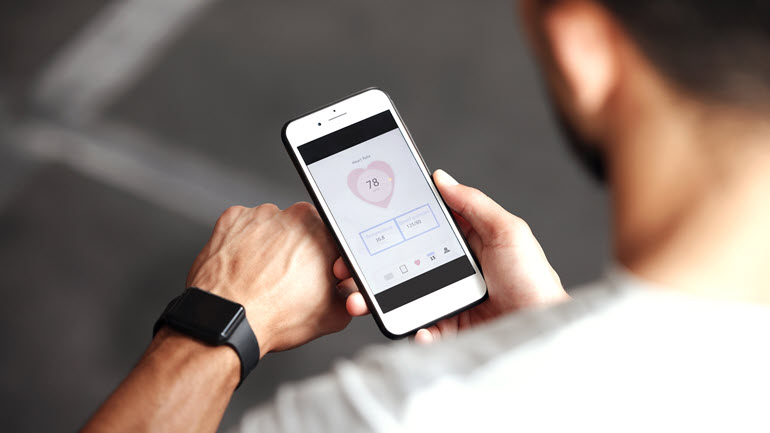 This article outlines the best practices for localizing SaMD (Software as a Medical Device). This is software that stands on its own and qualifies as a medical device based on its intended purpose, such as AI-based diagnostic imaging analysis, clinical decision support apps, remote monitoring platforms, health apps, etc.
SaMD Translation and Localization Services
Effective SaMD localization encompasses a broad scope of services, including:
1. User Interface (UI) Localization
Translating a SaMD user interface goes beyond converting strings from one language to another. UI localization includes adjusting text expansion and contraction (some languages require significantly more or less space than English), adapting date formats, units of measurement, and number formats, and ensuring that error messages, alerts, and clinical warnings are accurately conveyed. For SaMD, a mistranslated UI element (such as a dosing alert or a diagnostic threshold) could have direct patient safety consequences.
Software localization engineers and testers ensure that localized SaMD software performs correctly in target locales, including full functional testing and linguistic quality assurance (LQA).
2. Instructions for Use (IFU) and Labeling Translation
Regulators require that IFUs and device labeling be provided in the official language(s) of the target market. For SaMD, this includes on-screen help content, user manuals, quick reference guides, and any digital labeling displayed within the application.
An ISO 17100-certified translation process (including translation by a qualified medical translator and independent review by a second subject-matter expert) ensures accuracy, consistency, and regulatory compliance across all IFU and labeling content.
3. Clinical and Regulatory Documentation Translation
Companies that provide SaMD pursuing market clearance or approval must submit extensive regulatory dossiers, including technical files, Software Design Documents (SDDs), risk management files per ISO 14971, clinical evaluation reports (CERs), and post-market surveillance (PMS) reports.
A multilingual medical software translation provider who can offer all the languages you need and all the services under one umbrella (and with one single point of contact) can help you speed up the delivery of all regulatory documentation required for SaMD market authorization for submission to regulatory bodies.
4. Translation of Verification and Validation Documentation
Under IEC 62304 and FDA software guidance, SaMD manufacturers must document software verification and validation (V&V) activities. When SaMD is localized, validation documentation (including test protocols, test reports, and traceability matrices) must also be translated and maintained for audit readiness.
Software medical device translation teams who have the right experience translating all validation and verification deliverables will be an advantage.
5. Post-Market Surveillance and Vigilance Documentation
SaMD manufacturers must comply with ongoing post-market surveillance obligations under EU MDR, including the translation of adverse event reports, field safety corrective actions (FSCAs), field safety notices (FSNs), and periodic safety update reports (PSURs).
Ensure that the same teams are available to translate all post-market surveillance documentation to support vigilance reporting requirements across multiple jurisdictions, to avoid delays and ensure consistency.
6. Translation Risk Management
The IMDRF (International Medical Device Regulators Forum) categorizes SaMD according to the severity of the healthcare situation it is intended to address and the significance of the information it provides to clinical decisions. Higher-risk SaMD (those used in critical or life-threatening situations) require more stringent validation and documentation, and correspondingly more rigorous translation quality assurance.
For high-risk SaMD (e.g., AI-assisted cancer screening, sepsis prediction algorithms), back-translation and independent linguistic review by a clinical specialist is best practice.
Best Practices for SaMD Localization
For regulatory affairs, quality, and product teams working on SaMD globalization, we recommend the following best practices:
- Engage a translation partner early in the SaMD development lifecycle (ideally during the design phase) to ensure that internationalization (i18n) requirements are built into the software architecture from the outset.
- Develop a medical glossary and style guide for each target language before translation begins to ensure consistent terminology across the UI, IFU, and regulatory documentation.
- Use translation memory and terminology management tools to reduce costs and turnaround time on incremental software updates and regulatory submissions.
- Plan for text expansion in UI design. Languages such as German, French, and Finnish can expand English source text by 20–30%, which must be accommodated in UI layouts.
- Conduct in-country linguistic review (ICLR) for high-risk SaMD to validate clinical terminology accuracy with native-speaking healthcare professionals in the target market.
- Maintain a translation validation record in your device history file (DHF) or technical file to demonstrate regulatory compliance during audits and submissions.
- Look for a language partner that is open to a formal translation risk assessment by your auditors to assess our vendor management, technology stack, terminology control, file handling, and data security for peace of mind.
SimulTrans as a SaMD Translation Supplier
With 40 years of experience in medical and software translation, three ISO certifications, and a 97% customer satisfaction in 2025, SimulTrans has developed a rigorous, ISO-certified methodology specifically designed to meet the quality, compliance, and timeline demands of the medical device and SaMD industry.
The SimulTrans SaMD translation process is built on four pillars:
-
ISO 17100-Certified Quality Process: Every SaMD translation project follows a defined workflow that includes translation of strings and review by a qualified medical subject-matter expert.
-
Specialized Medical Terminology Management: SimulTrans builds and maintains client-specific medical glossaries and translation memories (TM), ensuring consistent use of approved terminology across all SaMD documentation, from UI strings to regulatory submissions.
-
Software Engineering and LQA Testing: SimulTrans engineers test localized SaMD products in target-language environments to verify functional correctness, proper text rendering, and locale-specific formatting compliance. Automated LQA tools are combined with human testers for comprehensive validation.
-
Regulatory Expertise Across Markets: SimulTrans project managers and linguists are experienced with the specific language and localization requirements of the FDA, EU, Health Canada, TGA (Australia), and other major regulatory bodies.
As the SaMD sector continues to grow (driven by advances in artificial intelligence, machine learning, digital health, and precision medicine), the demand for accurate, regulatory-compliant translation and localization services will only intensify. Medical device companies that invest in a disciplined SaMD localization strategy will be better positioned to achieve rapid market authorization, maintain product compliance, and ultimately deliver better outcomes for patients worldwide.
To learn more about SimulTrans SaMD translation and localization services, visit ISO-Certified Medical Translation Services, get a quote for your next project, or contact us to discuss your project requirements.